


 Home
Home-
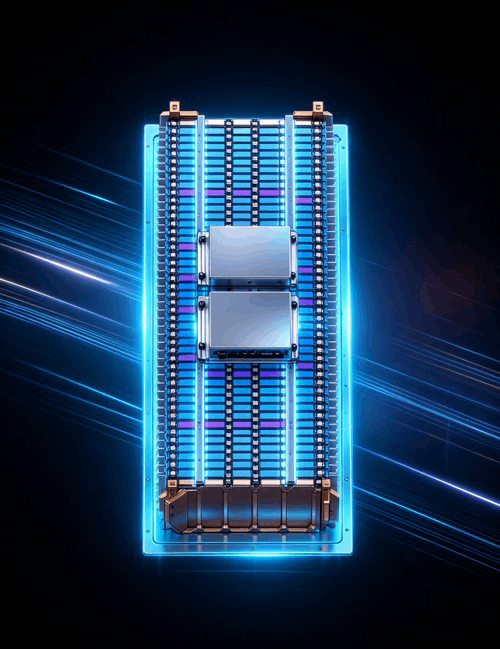
Ultra-High Specific Energy: Reaching the 400-500Wh/kg Frontier
Advanced Module Architecture & System Integration
From internal cooling channels to structural reinforcement, our modules are designed for performance and reliability.
Module Features:
Integrated internal cooling channels supporting both air and liquid cooling to maintain optimal operating temperatures during high-drain phases.
A multi-layer structural safety framework designed to isolate cells, suppress thermal propagation, and withstand mechanical shocks.
Architecture optimized for thermal-uniformity, ensuring balanced aging and peak performance across all cells within the module.
Pack-Level Engineering:
Seamless integration of high-density modules with proprietary BMS and aerospace-grade protective enclosures for maximum energy-to-weight efficiency.
Equipped with high-current aviation-grade electrical interfaces designed for secure, low-resistance power delivery in mission-critical environments.
Real-time, system-wide health monitoring and fail-safe coordination to ensure mission continuity and operator safety.
👉 Benefit: High energy density + high discharge + high reliability — all in one system.
Redefining Long Endurance: Mindway's 400- 500Wh/kg technology is specifically engineered to overcome the endurance bottleneck of modern UAVs.
👉 See our 400Wh/kg Battery / 500Wh/kg Ultra-Lightweight Battery Cells
FQA
Q: What is the advantage of Mindway’s battery system integration?
A: Our system integration focus is on maximizing the gravimetric efficiency—meaning we deliver more power with less dead weight. By combining integrated thermal channels with aviation-grade interfaces and our proprietary BMS, we provide a "Plug-and-Play" high-performance power system that meets the rigorous SWaP-C requirements of eVTOL and tactical UAV platforms.
-
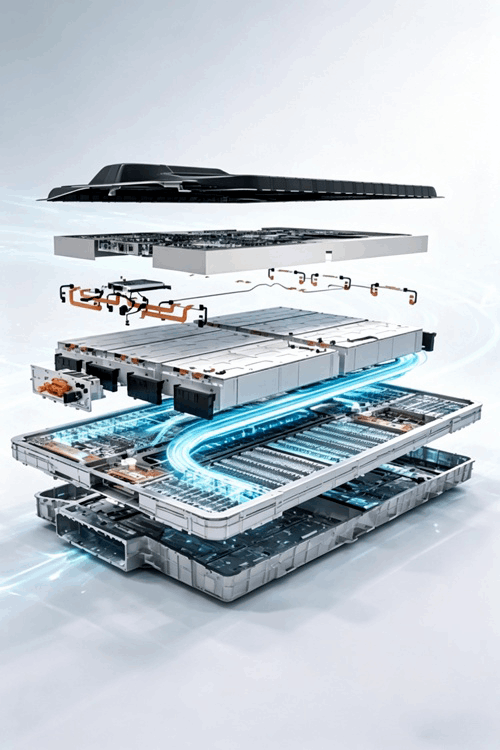
Thermal Engineering: Intelligent Cooling for High-Power Missions
Thermal Engineering & High-Power Reliability
Thermal performance is the cornerstone of battery safety and mission endurance. In high-drain applications such as eVTOL takeoff or tactical rapid-response, heat buildup is the primary enemy of cell longevity. Mindway integrates advanced active and passive cooling strategies to ensure cells operate within their optimal thermal window, even during sustained high-C discharge.
Cooling Technologies:
Integrated Air Cooling: Optimized for SWaP-C sensitive platforms. Our lightweight airflow architectures maximize convective heat dissipation without adding significant parasitic mass.
Advanced Liquid Cooling Systems: Designed for heavy-load missions and fast-charging cycles. By utilizing high-thermal-conductivity coolants and precision-machined cold plates, we achieve superior thermal uniformity across the entire pack, preventing localized hotspots.
👉Benefit:
Stable thermal control doesn't just ensure safety; it unlocks higher discharge capacity and extends cycle life. By mitigating thermal stress, Mindway batteries maintain peak performance throughout the entire mission profile, from high-altitude cruising to high-power landing maneuvers.
FAQ
Q: Why is liquid cooling necessary for high-power battery missions?
A: For missions involving sustained high-power discharge (like eVTOL or heavy-lift UAVs), liquid cooling provides much higher heat transfer coefficients than air. This ensures thermal stability, prevents thermal runaway, and allows the battery to maintain a high state of health (SOH) over more cycles.
-

Mission-Grade Safety: Multi-Level Protection & BIT Diagnostics
Mission-Critical Reliability & System Safety
Mindway batteries incorporate multi-level safety protection to ensure reliability under demanding flight and defense operations.
Safety Features:
Advanced chemistry formulated to prevent thermal runaway and ensure stability under extreme mechanical stress.
Precision degassing and pressure-relief mechanisms that mitigate internal pressure buildup, preventing catastrophic casing failure.
Redundant architecture offering cell, module, and system-level coordination to isolate faults and maintain mission continuity.
System-level safety coordination
Comprehensive Built-In Test (BIT) for real-time autonomous self-diagnosis, providing critical State-of-Health (SOH) data for pre-flight and in-mission decision making
👉 Benefit: Maximum safety for UAVs, defense platforms, and aerospace missions.
FQA
Q: How does Built-In Test (BIT) improve drone safety?
A: Built-In Test (BIT) technology allows the battery to perform real-time self-diagnosis of its internal state. By monitoring parameters like impedance, voltage balance, and temperature trends, it provides early warning of potential issues, ensuring mission-grade safety and preventing mid-flight failures in defense and aerospace platforms.
-
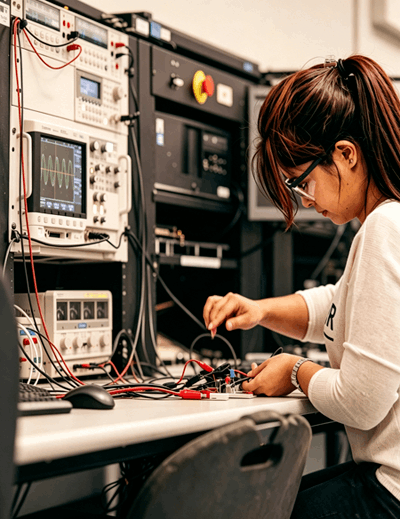
Lifecycle Intelligence: Maximizing Cycle Life & TCO Optimization
Lifecycle Optimization & Intelligent Performance Management
We optimize every cell with strict consistency control and lifecycle algorithms to reduce degradation and extend service life.
Core Technologies:
High-Fidelity Cell Matching: Strict impedance and capacity grading ensures ultra-high consistency, preventing premature pack failure caused by individual cell drift.
Dynamic Adaptive Equalization: Advanced balancing circuits that actively manage energy distribution, maintaining voltage symmetry throughout the entire discharge cycle.
Intelligent Mission-Analytics: Real-time tracking of SOC (State of Charge), SOH (State of Health), and mission-status to provide predictive maintenance insights and ensure flight safety.
Predictive Degradation Mitigation: Proprietary algorithms that optimize charging profiles and discharge limits to significantly extend the usable service life and minimize TCO.
👉 Benefit: Longer usable lifespan, reduced maintenance, and stable performance throughout the mission profile.
FAQ
Q: How does intelligent BMS management extend battery cycle life?
A: Intelligent management extends battery cycle life by using predictive algorithms to mitigate degradation. By performing precision cell matching and dynamic equalization, the system prevents localized stress on individual cells. This ensures the entire pack ages uniformly, reducing the Total Cost of Ownership (TCO) and maintaining stable performance over hundreds of additional missions.
-
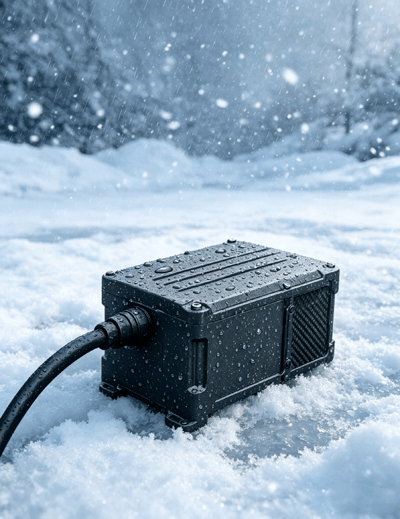
Extreme Resilience: From -56°C Arctic Cold to 6,000m Deep Sea
Environmental Resilience & Ruggedized Engineering
Mindway power systems are engineered to remain stable in high-temperature, high-humidity, rain, vibration, and shock conditions. Our aviation-grade protection design ensures consistent performance in harsh mission environments.
High Environmental Adaptability:
Climate-Hardened Resilience: Engineered for stable operation in extreme heat and tropical humidity.
Superior Ingress Protection: Advanced hermetic sealing and anti-corrosion treatments for salt-spray and maritime missions.
Aerospace-Grade Exoskeleton: High-strength alloys and carbon-fiber composites ensure maximum protection with minimum weight.
Validated Mechanical Hardening: Structural integrity optimized via advanced simulation to survive high-G impacts and intense vibration.
👉Benefit: Reliable performance in missions where commercial-grade batteries fail.
👉See our -56℃ Ultra-Low Temperature Series / Deepsea Lithium Battery
FQA
Q: What makes a battery "aviation-grade" for harsh environments?
A: Aviation-grade environmental adaptability involves more than just waterproofing. It includes specialized vibration hardening, resistance to salt spray and corrosion for maritime use, and the ability to handle rapid temperature shifts. Mindway uses structural simulations and advanced encapsulation to ensure performance in tactical environments where standard batteries would fail due to moisture or mechanical shock.
-

Weight Optimization: Aerospace-Grade Structural Integration
Lightweight, High-Strength Engineering
Our structural design enhances both strength and integration efficiency, enabling lighter systems without sacrificing durability.
Design Highlights:
Seamless Cell-to-Structure (CTS) integration that reduces parasitic mass and enhances overall airframe rigidity.
Mechanical designs engineered to withstand high G-forces and extreme vibrational frequencies, ensuring reliability in tactical and high-speed missions
Utilization of Aerospace-grade Carbon Fiber and ultra-lightweight alloys to ensure maximum protection with minimum weight penalty
👉Benefit:Higher endurance, better flight balance, and stronger structural reliability.
FAQ
Q: How does integrated battery architecture improve drone flight time?
A: By using integrated battery-airframe architecture, we eliminate redundant housing weight and use the battery itself as a structural component. This weight-saving engineering significantly improves the energy-to-weight ratio, allowing for longer endurance and better flight dynamics.
Hailing from premier organizations in aerospace, defense, maritime, and advanced energy, Mindway's R&D team brings unparalleled multi-domain expertise to every mission-critical solution.
👉 Have a specific requirement or a technical question? Our engineering team is here to support you.
🌐 网站:mindwaybattery.com
📞WhatsApp:+86 18971062394