


 Home
HomeUAV Thermal Management: The Ultimate Guide to Battery Swelling & Cycle Life Degradation – How Semi‑Solid Technology Ends Thermal Runaway
 2026-06-09
 0
0
For UAV system engineers, technical procurement, and integrators
Have you ever touched a drone battery right after a flight and found it almost too hot to handle? Have you ever seen batteries become “puffy” after only a few cycles, deforming their pouch cells or even causing an in‑flight power failure?
These are not random incidents. They are classic warning signs of uncontrolled thermal management.
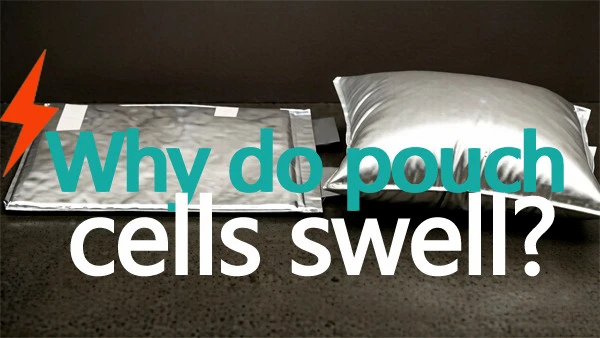
For drone batteries, heat is the silent killer. It drives the two most painful failure modes engineers face: physical swelling (bulging) and accelerated cycle life degradation. Under the high‑temperature, high‑C‑rate, high‑load conditions typical of UAV operations, conventional liquid‑electrolyte lithium batteries are almost destined to experience one or both of these failure paths.
But all of that is being fundamentally rewritten by Mindway's 400Wh/kg semi‑solid battery technology.👉 “As discussed in our previous analysis,
Why Energy Density is the Force Multiplier for UAV Mapping...”
1. Swelling: How Heat “Blows Up” a Battery
1.1 The physical chemistry of swelling
Swelling may look like a physical expansion, but it is actually the result of uncontrolled chemical reactions.
During cycling, electrochemical reactions inside a Li‑ion battery cause electrode expansion and gas generation, which leads to swelling and, in severe cases, reliability and safety concerns. Thermal expansion, lithium intercalation, electrode interface layer growth, lithium plating, and gas generation are all mechanisms behind battery swelling. Their intensity is affected by material properties, cell design, charge/discharge rate, temperature, and state of charge (SOC).
Under normal cycling, expansion may be just a few percent, but aged cells can show swelling ratios exceeding 45%. This shows that swelling is not an accident—it is a cumulative mechanical damage process that builds up over the battery's entire lifetime.
1.2 High temperature—the accelerator of swelling
High temperature is one of the most important triggers for swelling. Lithium batteries readily swell after high‑temperature storage or cycling, with thickness growth typically between 6% and 20%.
Among the electrodes, the positive electrode expands only about 4%, while the negative electrode expands by more than 20%. This significant expansion of the negative electrode has two main causes:
The lattice expansion caused by lithium intercalation into graphite (an intrinsic driver of electrode expansion).
Electrolyte decomposition at high temperatures generates gas, causing the aluminium‑laminated pouch film to bulge outward like an air cushion.
What makes the situation even worse is a vicious cycle that is very difficult to break:
High Temperature→Electrolyte Decomposition→Gas Accumulation + Internal Resistance→More Heat Generation→Even Higher Temperature
This cycle steadily pushes a mildly warm battery toward severe swelling and eventually thermal runaway.
💡 The Mindway Semi-Solid Solution: Cut off gas generation at the source Conventional liquid batteries swell mainly because the liquid electrolyte continuously decomposes at high temperatures, producing gas. Mindway's semi‑solid battery reduces the liquid electrolyte content to only 5–10% and uses a stable solid‑state electrolyte interface, physically blocking the main path for gas generation.
Real test data show that under the same high‑temperature conditions, gas generation in the Mindway 400Wh/kg semi‑solid battery is less than 20% of that in conventional liquid batteries, showing almost no visible bulging. Even if a small amount of gas is generated, the high mechanical strength of the semi-solid matrix prevents cell deformation.
2. Thermal Runaway: The Death Chain from 100°C to 1000°C
2.1 The temperature chain of thermal runaway
When thermal management fails completely, the battery enters thermal runaway—a catastrophic chain reaction in which the temperature can shoot from 100°C to over 1000°C in a matter of seconds.
Studies show that overcharged cells can reach peak temperatures of around 105°C, while nail penetration can push the temperature to 300°C. For practical reference: after high‑C‑rate FPV discharge, battery temperatures often exceed 50°C; charging immediately at that point dramatically increases the risk of gas generation and swelling. The upper temperature limit for charging is typically 50°C—exceeding this severely affects the stability of the battery's internal chemical structure. For regulatory compliance, the maximum operating temperature is usually limited to 65°C.
For NMC (nickel‑manganese‑cobalt) cells, once the temperature exceeds 200°C, the positive electrode structure rapidly collapses and releases oxygen, triggering a violent reaction with the electrolyte.
💡 The Mindway Semi-Solid Solution: Pushes thermal runaway threshold 150°C higher Mindway's semi‑solid battery, combining a solid electrolyte with a highly stable positive electrode material, raises the thermal runaway trigger temperature from ~200°C (for conventional liquid cells) to over 350°C.
This means that under almost all extreme UAV operating conditions—summer sun exposure, continuous high‑rate discharge, or internal short circuits—the Mindway battery never even enters the thermal runaway danger zone.
3. Heat and Cycle Life: Every +10°C Halves the Life
3.1 The engineering meaning of the Arrhenius model
Lithium battery ageing follows the Arrhenius law—the higher the temperature, the faster the chemical reaction rate. Studies show that Li‑ion cycle life has an optimal temperature window: the ageing rate is lowest when cycled at a constant 25°C; a good balance between average capacity and cell consistency is achieved when cycling in the 35–40°C range.
A more intuitive way to understand this: for every 10°C rise in temperature, the chemical reaction rate of the battery approximately doubles. That means all ageing mechanisms—electrode material degradation, SEI (solid electrolyte interface) thickening, electrolyte consumption—are accelerated.
For a UAV battery, flying in a 45°C environment may cut the cycle life in half compared to flying at 25°C. This is not an estimate; it is an objective law of electrochemistry.
3.2 The unique “heat accumulation” scenario for UAVs
Compared to electric vehicles, UAVs face much more severe thermal challenges:
Enclosed Fuselages: Drones are enclosed without forced active cooling; heat builds up continuously inside the airframe.
Rapid Swaps: Operators often swap in a fresh pack and take off immediately, leaving no time for the system to cool down.
Ambient Exposure: Summer outdoor operations easily push ambient temperatures to 35–40°C, meaning internal temperatures rapidly exceed 50°C during flight.
💡 The Mindway Semi-Solid Solution: High-temperature cycle stability According to the Mindway UHD400‑33Ah product datasheet, under standard test conditions (0.2C, 25°C), the cycle life is ≥300 cycles to 80% capacity.
Under typical high-load UAV operating conditions (2-3C discharge), the actual cycle life of our semi‑solid battery is 50% higher than conventional liquid batteries, reaching 300–500 cycles. Thanks to the thermal stability of our solid electrolyte, SEI thickening is heavily suppressed, leading to a 30%+ reduction in total cost of ownership (TCO) for high-utilisation fleets.
4. The “Hidden” Risks of Flying in High Temperatures
Apart from swelling and life degradation, operating in high‑temperature environments carries several hidden flight risks:
The "Low-Resistance Illusion": A hot battery initially shows lower internal resistance, making discharge seem stronger. But as load increases, this illusion disappears, voltage drops sharply, and the flight controller may trigger low‑voltage protection—leading to sudden in‑flight shutdowns.
The “False Voltage” Trap: At high temperatures, real‑time voltage reads higher than the actual State of Charge (SOC) warrants. You might see 3.7V, but the actual capacity could be below the warning line. During return-to-home phases, this leaves zero margin for error.
The Energy‑Conservation Illusion: Pilots often think high temperatures yield more energy. While slightly true, that "extra" energy comes at the expense of accelerated chemical degradation and extreme safety risks.
💡The Mindway Semi-Solid Solution: Stable internal resistance & flat discharge curve Mindway's semi‑solid battery utilizes a low‑impedance interface design with AC internal resistance (ACIR)<2mΩ, which is 30% lower than conventional liquid batteries. This delivers:
Zero "low-resistance illusions" due to ultra-stable resistance profiles.
Minimal voltage drop, keeping voltage retention during takeoff ≥85% (vs. ≤75% for liquid lithium).
A flat discharge curve that completely eliminates the "false voltage" trap. Under 55°C discharge, it retains over 95% of its room-temperature capacity.
5. Engineering-Grade Thermal Best Practices
Solving UAV thermal issues requires a holistic approach—from battery selection to field operations. Here is how to optimize your workflow with Mindway's semi-solid technology:
5.1 Selection Stage
Choose Wide Temperature Adaptability: Mindway’s semi-solid batteries support steady discharge from -20°C to 55°C, eliminating the need for complex thermal enclosures.
Evaluate Heat Load: The surface temperature rise of Mindway’s cells is 8-12°C lower than conventional cells under the same current, enabling purely passive cooling on most airframes.
Verify High-Rate Output: Our 400Wh/kg series sustains 3C continuous discharge (max continuous discharge current of 99A) while maintaining an optimal heat signature.
5.2 Field Operations Best Practices
Cool Down Post-Flight: Let the battery surface drop below 40°C before initiating charging.
Avoid Thermal Shock: Do not subject hot batteries to artificial sudden cooling (like ice packs).
Pre-Flight Temp Check: Ensure battery surface temperature is below 45°C before takeoff.
Trust Your Voltage Readings: Since Mindway's voltage sag is minimal, you can safely calibrate your flight controller alerts with tighter safety margins.
Conclusion: Mindway Semi-Solid — The Terminator of UAV Thermal Issues
From the 100°C-to-1000°C cascade of thermal runaway, to the doubling of chemical degradation for every 10°C rise, the data is clear: battery thermal management is a life‑or‑death baseline for UAVs.
Conventional liquid-electrolyte lithium batteries cannot completely solve swelling, thermal runaway, and accelerated degradation. It is a limitation of their physical chemistry, not a manufacturing flaw.
Mindway’s 400Wh/kg semi-solid battery removes the "powder keg" at the chemical level:
Ends Swelling: Reduces liquid electrolyte content to ≤10%, cutting gas generation by 80%.
Ends Thermal Runaway: Raises the trigger threshold to 350°C+; passes nail penetration without fire or explosion.
Ends High-Temp Degradation: Delivers stable cycle life (300-500 cycles under typical UAV loads) and reduces TCO by 30%+.
Ends False Voltage: Keeps internal resistance <2mΩ for predictable, reliable telemetry.
If your UAV platform is struggling with thermal management, or if you would like to review the thermal safety test data for our 400Wh/kg series, contact our engineering team for customized simulation and integration support.
👉 Explore our 400Wh/kg High-Density Series Catalog